
You have measured the ceiling, worked out the R-value, and now there are two formats of the same insulation in front of you. One comes as pre-cut batts in a pack. The other comes as a long blanket on a roll. Both promise the same thermal performance and the same energy efficiency on the label, so which one actually belongs in your home?
The short answer is that it depends on the space you are insulating. Rolls are fast over long, open runs with few obstructions. Batts are cut to suit standard joist and stud spacing, which describes most Melbourne ceilings and almost every wall. This guide to insulation batts vs rolls covers how the two compare on fit, coverage, handling and cost, and where each one makes sense.
What is the difference between batts and rolls?
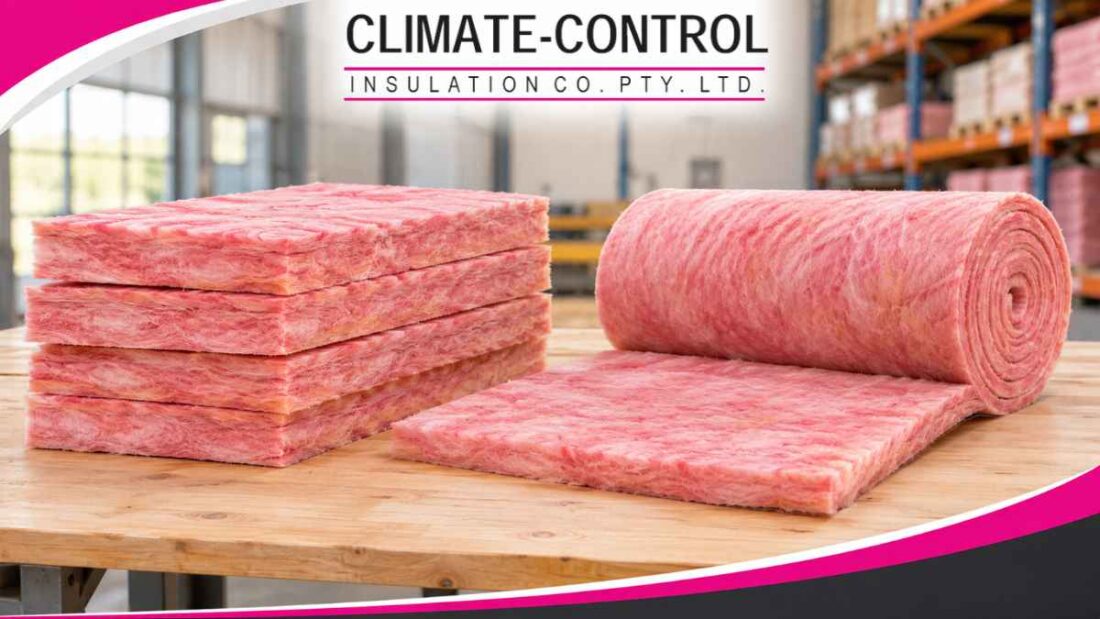
Batts and rolls are usually made from the same bulk insulation, typically glasswool or polyester, so the real difference between them is the shape. A batt is a pre-cut rectangle, sized to sit snugly between framing members. Most ceiling and wall batts are about 1,160 mm long and come in widths of 430 mm or 580 mm, to suit framing at 450 mm or 600 mm centres.
An insulation roll is one continuous blanket, which you roll out along the bay between two joists and cut to length at the end of the run. Ceiling insulation rolls are designed to sit on top of the ceiling, between and over the joists, in the same way batts do.
It is worth separating ceiling insulation rolls from roofing blankets. A roofing blanket goes directly under the roof sheeting, usually on metal roofs, and is a different product with a different job. This article is about insulation that sits on the ceiling.
Does the format change the R-value?
No. The R-value printed on the pack measures thermal resistance, and an R5.0 batt and an R5.0 roll give the same thermal resistance when they are installed properly. If you need a refresher on what the number means, our guide to R-value explains it.
What changes real-world performance is the fit. Insulation only reaches its rated R-value when it is installed at full thickness with no gaps, because small gaps create paths for heat losses in winter and heat gain in summer, and compressed insulation loses part of its rating because the trapped air that does the insulating gets squeezed out. So the better question is which format will give you a continuous, uncompressed layer in your particular roof space.
When batts make more sense
Batts suit the way most Melbourne homes are framed. If your ceiling joists sit at a standard 450 mm or 600 mm spacing, batts drop straight into each bay with little or no cutting. That makes them the easier choice in a number of common situations.
Tight or cluttered roof spaces. Older homes often have low roof pitches, ducting, electrical cables and plenty of other obstructions, and a single batt is light and easy to manoeuvre around them. Dragging a roll through the same space and cutting it around every obstacle is slow, awkward work.
Topping up existing insulation. When you lay new insulation over what is already there, short lengths are easier to position and adjust. You can lay batts across the old layer and fill the low spots without fighting a long blanket.
Walls. Wall insulation goes in vertically, and batts are made to friction fit between studs so they stay put until the plasterboard goes on. Rolls are not designed for walls. For a closer look at wall products, see our guide to R2.5 batts for wall insulation.
DIY jobs. Batts come in packs that fit through a standard manhole and can be carried into the roof one handful at a time. Most people who install their own insulation find batts more forgiving.
When rolls make more sense
Rolls come into their own when the ceiling space is open, the framing is regular and the runs are long.
Large, open ceiling areas. On a new build or a large renovation where the ceiling space is wide open, a roll can cover a long bay in one pass, with far fewer joins than a row of batts.
Fewer joins. Every join between two batts is a place where a small gap can open up. A continuous roll removes most of those joins along the length of the bay, which can help keep the layer continuous.
Irregular joist lengths. Because you cut a roll to length on site, you can match odd bay lengths without piecing together offcuts.
Speed on big jobs. Experienced installers working in an open roof space can lay rolls quickly. The time saved grows with the size of the area.
The trade-off is handling. A roll is bulkier and heavier than a pack of batts, which matters when everything has to go up through a small manhole and across narrow joists.
Which to use for ceilings, walls and floors
| Area | Usual choice | Why |
|---|---|---|
| Ceilings in established homes | Batts | Standard joist spacing, tight access, easy to top up |
| Large open ceilings in new builds | Batts or rolls | Rolls are quick on long open runs, batts suit standard bays |
| External walls | Batts | Friction fit between studs, sized for wall cavities |
| Suspended timber floors | Batts | Fitted between bearers and joists and held with strapping |
For underfloor work, batts are held up from below with insulation strapping, which keeps them in contact with the floor.
What R-value should you use in Melbourne?
Format comes second to choosing the right R-value. Melbourne sits in NCC climate zone 6, a temperate climate where homes need to hold heat in through winter and keep it out through summer, so the ceiling does most of the work. For a Melbourne ceiling, R5.0 to R6.0 is the range worth aiming for. Lower R-values suit topping up an existing layer or a shallow roof space where a thick product would be compressed.
For walls, Sustainability Victoria recommends R2.5 wall insulation for the Victorian climate, with R1.5 as the minimum.
Whichever format you choose, check the thickness against the depth of your roof space before you buy. A thick batt or roll squeezed under a low roof line will not deliver the energy efficiency on the label.
What to check before you buy
- Joist spacing. Measure from the centre of one joist to the centre of the next. Most homes are 450 mm or 600 mm, which tells you which batt width to buy.
- Roof space depth. Make sure there is room for the full thickness of the product without compression.
- Existing insulation. Check its condition. If it is damp, mouldy or contaminated with vermin, it should come out first. Our guide to removing old insulation covers what to look for.
- Downlights and wiring. Keep the clearances your downlights require, and never cover old halogen fittings that are not rated for contact with insulation.
- Coverage. Add up the ceiling area in square metres and divide by the coverage on each pack or roll, then round up.
Insulation batts vs rolls: our take
For most Melbourne homes, batts are the practical choice. They suit standard framing, handle easily through a manhole, work in walls and floors as well as ceilings, and make it simple to get a snug, gap-free fit. Ceiling insulation rolls earn their place on large, open ceiling areas, where long continuous runs save time and reduce joins.
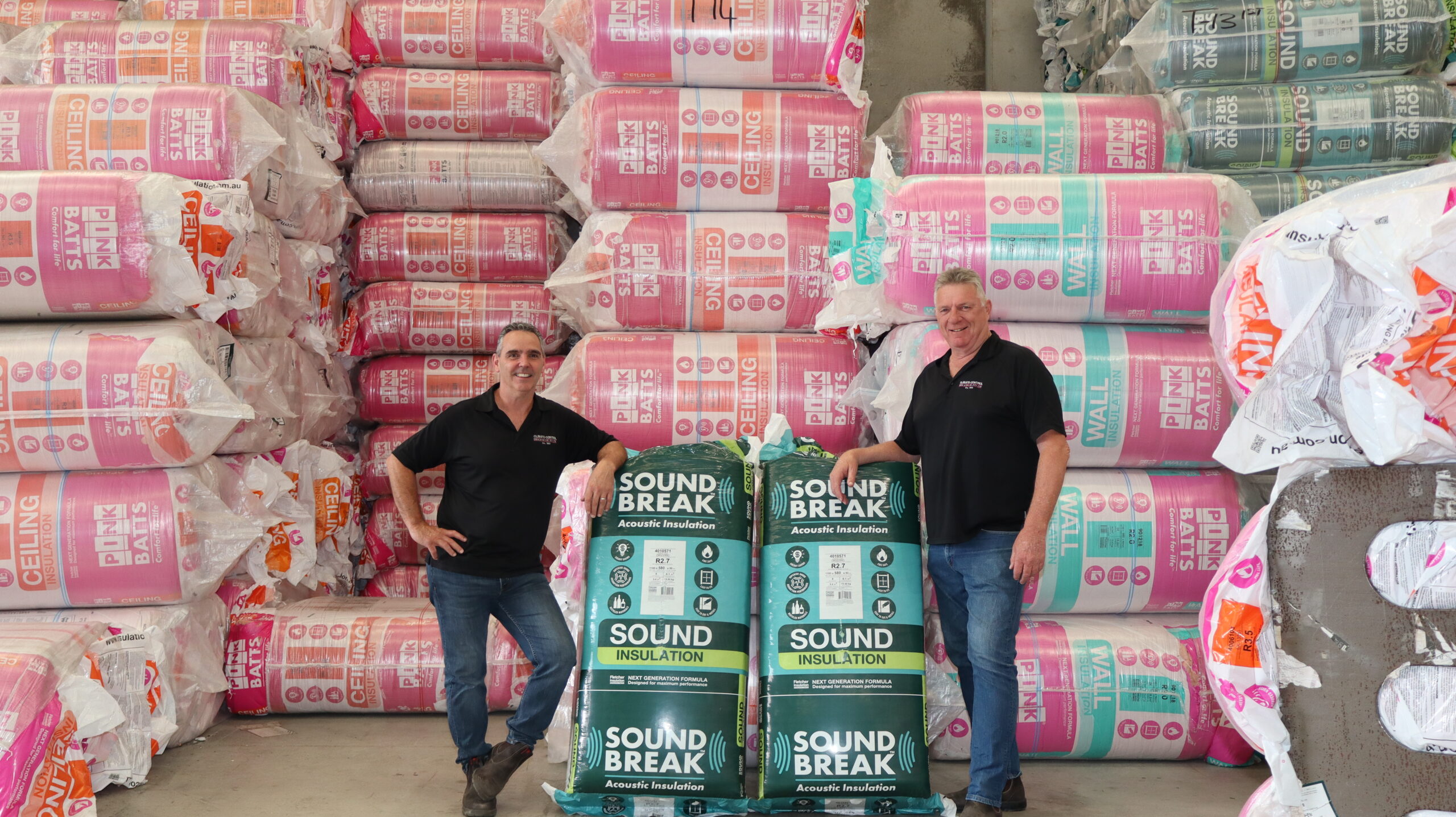
We stock both insulation batts and ceiling rolls at our Nunawading warehouse, along with the full range covered in our Pink Batts guide. If you are weighing up a DIY job against getting it installed, our page on insulation costs gives a sense of the numbers.
Frequently Asked Questions
Are insulation rolls cheaper than batts?
Per square metre, the material cost of an insulation roll and a batt of the same R-value is usually similar. Rolls can work out slightly cheaper on large open areas because there is less offcut waste and less labour. In standard bays, batts often produce less waste because they are already cut to size.
Can I mix batts and rolls in the same ceiling?
Yes. You can use rolls on the long open runs and batts in the tighter sections, as long as both have the same R-value and the layer is continuous with no gaps between them.
Are rolls or batts easier for DIY?
Batts are easier for most people, because they are lighter, fit through a manhole in compressed packs, and drop into standard bays without much cutting. Rolls are better suited to installers working in large, open roof spaces.
Batts or rolls insulation: which lasts longer?
Neither format lasts longer than the other. Both are made from the same bulk insulation, and both will perform for decades if they stay dry and are not disturbed. What shortens their life is moisture, vermin, and trades walking on or moving the insulation.
Not sure which suits your ceiling? Buy batts or rolls online and collect free from our Nunawading warehouse or book a free measure and quote with our ceiling insulation installers and let us do it for you.
Call 13 12 24.