
A 2026 Guide for Melbourne Homeowners
If you’re researching insulation costs, you’re probably trying to answer one simple question: how much does insulation actually cost to install in an Australian home?
Most insulation projects in Melbourne typically range from $1,500 to $6,000+, depending on the size of the home, insulation type, access, and labour involved.
This guide breaks down insulation costs in Australia clearly and realistically, including roof insulation costs, wall insulation costs, underfloor insulation costs, and what impacts the final price you’ll pay.
How Much Does Insulation Cost?
For a typical Melbourne home, insulation installation costs usually fall within these ranges:
- Roof & ceiling insulation:
- Materials typically: $5–$20 per m² depending on product/R-value
- Installed prices typically: ~$35–$70+ per m² for professional installation, meaning a typical roof job can run $2,000–$5,000+ for an average home.
- Wall insulation: $1,500 – $4,000
- Underfloor insulation: Materials: $20–$40+ per m²
- Professional installation: Add labour costs (often $60–$120/hour) on top
- Full home insulation (roof, walls & floor): $15–$50+ per m² installed depending on insulation type and home layout.
- Many quotes range from $2,000–$6,000+ depending on scale and complexity.
2026 price guide — Melbourne supply & install estimates
| Type | R-value | Material only (per m²) | Supply & install (per m²) | Typical home cost |
| Ceiling / roof | R3.5 | $5–$9 | $15–$25 | $800–$1,500 |
| Ceiling / roof | R4.1 | $8–$12 | $20–$32 | $1,000–$2,000 |
| Ceiling / roof | R5.0 | $10–$15 | $25–$40 | $1,200–$2,500 |
| Ceiling / roof | R6.0 + | $14–$20 | $35–$55 | $2,000–$5,000+ |
| Wall | R1.5 Not Available | |||
| Wall | R2.0 | $7–$10 | $19–$32 | $1,200–$2,500 |
| Wall | R2.5 | $9–$13 | $30–$52 | $1,500–$4,000 |
| Underfloor | R1.5 | $10–$15 | $25–$40 | $800–$1,500 |
| Underfloor | R2.0 | $15–$25 | $30–$50 | $1,200–$2,000 |
| Underfloor | R2.5 + | $20–$40 | $40–$65 | $1,500–$3,000+ |
Prices are indicative 2026 estimates for Melbourne. Actual costs vary by home size, access, and materials chosen. Get a free quote for accurate pricing.
These figures are based on average single-storey homes and standard access. Multi-storey homes, tight roof spaces, or older houses may sit toward the higher end of these ranges.
Insulation Cost Per Square Metre (m²)
As a general guide to material costs in 2026:
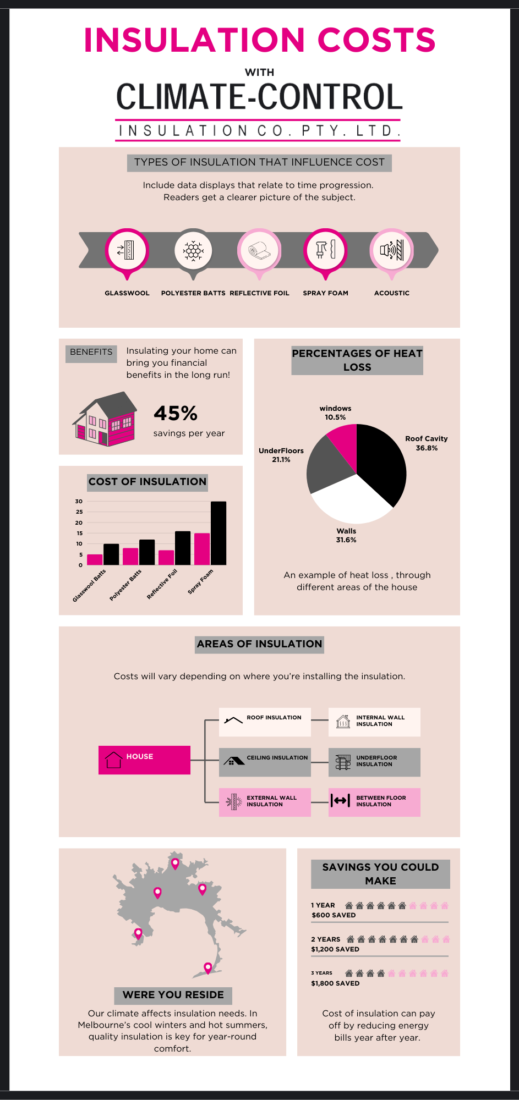
- Glass wool batts: $5–$10 per m²
- Polyester batts: $8–$14 per m²
- Reflective foil insulation: $7–$16 per m²
- Spray foam insulation: Pricing is typically quoted as an installed cost, not per m² for materials alone – but can range between $60–$120 per m²
These figures usually cover materials only. Installation costs are additional and depend on the area being insulated and how accessible it is.
Key Factors Affecting Insulation Costs
When planning your insulation project, several factors will influence the overall cost, including:
Type of Insulation (Material Costs)
The insulation material you choose plays a major role in overall cost — not just for supply, but also installation time.
- Glass wool: This is one of the most affordable and widely used options for ceiling insulation and wall batts. It’s lightweight and effective, offering great thermal and acoustic insulation properties.
- Polyester batts: These are a bit pricier but have the benefit of being made from recycled materials. They are durable, non-irritant, and ideal for those with allergies.
- Reflective foil insulation: Perfect for roofs, this type of insulation helps deflect radiant heat, making it an excellent option for hot climates. Roof insulation costs using reflective foil are typically higher due to the additional labor involved in installation.
- Spray foam: Spray foam is one of the more expensive products with a higher insulation rating. It works well in hard-to-reach areas and irregular spaces.
- Acoustic insulation: If noise reduction is a priority, acoustic insulation batts are available for walls, floors, and ceilings to minimize sound transmission. While they add an extra layer of comfort, they can raise the overall cost of the insulation project.
Insulation Costs by Area of the Home:
Where insulation is installed has a direct impact on pricing.
Roof & Ceiling Insulation Costs
Roof and ceiling insulation are usually the most affordable upgrades.
Expect material costs of $8–$16 per square metre, with installed prices typically landing between $1,000 and $2,500 for most homes.
Wall Insulation Costs
Wall insulation can be more complex, particularly when retrofitting existing homes.
Costs usually range from $1,500 to $4,000, depending on wall access and insulation type.
Underfloor Insulation Costs
Underfloor insulation is common in raised homes and can significantly improve comfort.
Prices typically range from $1,200 to $3,000, depending on access, height, and floor size.
Labour Costs for Insulation Installation
Professional installation ensures insulation performs correctly and meets safety standards.
In Melbourne, labour costs generally range from $40 to $80 per hour, depending on:
- Installation complexity
- Type of insulation
- Roof or subfloor access
Spray foam and reflective foil insulation usually require more time and specialist skills, which increases labour costs compared to standard batt installations.
To find out more about the 2026 Victorian Insulation Rebate, see our Blog.
Size and Layout of Your Home:
Larger homes require more materials and labour.
Homes with:
- Low roof clearance
- Multiple levels
- Irregular layouts
often cost more to insulate due to increased installation time and difficulty.
The Long-Term Savings of Insulation
Insulation is one of the most cost-effective home upgrades available.
A properly insulated home can reduce heating and cooling costs by up to 50%, improving comfort year-round while lowering energy bills. Over time, insulation often pays for itself through energy savings alone.
Additional Benefits of Acoustic Insulation
Acoustic insulation improves sound control between rooms, floors, and living spaces.
It’s particularly useful in:
- Multi-storey homes
- Home offices
- Bedrooms and media rooms
- While slightly more expensive than standard thermal insulation, many homeowners consider it a worthwhile upgrade.
Government Rebates and Financial Assistance
Before starting an insulation project, it’s worth checking whether your home is eligible for any government-supported discounts or minimum energy efficiency requirements. In Victoria, insulation support is primarily delivered through the Victorian Energy Upgrades (VEU) program, which provides discounts on approved energy-efficiency improvements rather than direct cash rebates.
From 2025 onward, Victoria introduced updated minimum energy efficiency standards for rental properties, requiring ceiling insulation where it is not already installed or where existing insulation does not meet minimum performance levels. These standards are designed to reduce energy bills, improve tenant comfort, and support Victoria’s broader Gas Substitution Roadmap.
As the VEU program expands in 2026, new insulation discounts are being introduced to help homeowners and landlords reduce the upfront cost of installing or upgrading ceiling insulation, particularly in older and under-insulated homes.
Eligibility, discount levels, and installation requirements vary and must be met through VEU-approved installers using compliant products.
For the most up-to-date information, refer to the Victorian Government’s official guidance here. here. Also see our Blog on Victorian Insulation Rebate HERE.
Final Thoughts on Cost of Insulation
Insulation is a long-term investment in comfort, energy efficiency, and home performance.
Whether you’re upgrading roof insulation, installing wall batts, or adding underfloor insulation, understanding costs helps you make informed decisions and avoid surprises.
All pricing in this guide reflects general market estimates only. Actual costs will vary depending on your home, materials chosen, and installation conditions.
For accurate pricing, the best step is a professional assessment.
Please note that the cost of insulation prices listed here are based on current market research and are meant as general guidelines. Actual costs may vary depending on specific project requirements, materials, and service providers. This information is not intended as a definitive quote, and we recommend obtaining a formal estimate from a qualified professional at Climate Control Insulation to determine exact pricing.
How much does ceiling insulation cost in Melbourne?
Ceiling insulation in Melbourne typically costs between $800–$2,500 installed, depending on home size, R-value selected, and accessibility. For an average 3-bedroom home, expect to pay around $1,200–$1,800 for supply and installation.
How much does underfloor insulation cost in Melbourne?
Underfloor insulation in Melbourne generally costs $1,200–$3,000 installed depending on floor area and access. Prices vary based on insulation type (bulk batts vs. reflective foil) and subfloor conditions.
Is home insulation worth the cost in Melbourne?
Yes. Insulation typically reduces heating and cooling costs by 40–50%, paying for itself within 3–7 years. In Melbourne’s climate with both hot summers and cold winters, ceiling and underfloor insulation deliver the best return on investment.
Are there rebates available for insulation in Victoria?
Victorian insulation rebates are currently available for social housing. For general homeowners, the next round is expected to open in October 2026 — eligibility rules are yet to be confirmed. Keep up to date here on our 2026 Victorian Insulation Rebate Blog – https://www.climatecontrol.com.au/victorian-insulation-rebate-2026/
Do you offer free insulation quotes in Melbourne?
Yes. Climate Control Insulation provides free, no-obligation quotes across Melbourne, Geelong, and the Mornington Peninsula. Call us or fill in the online enquiry form to arrange a measure and quote.