

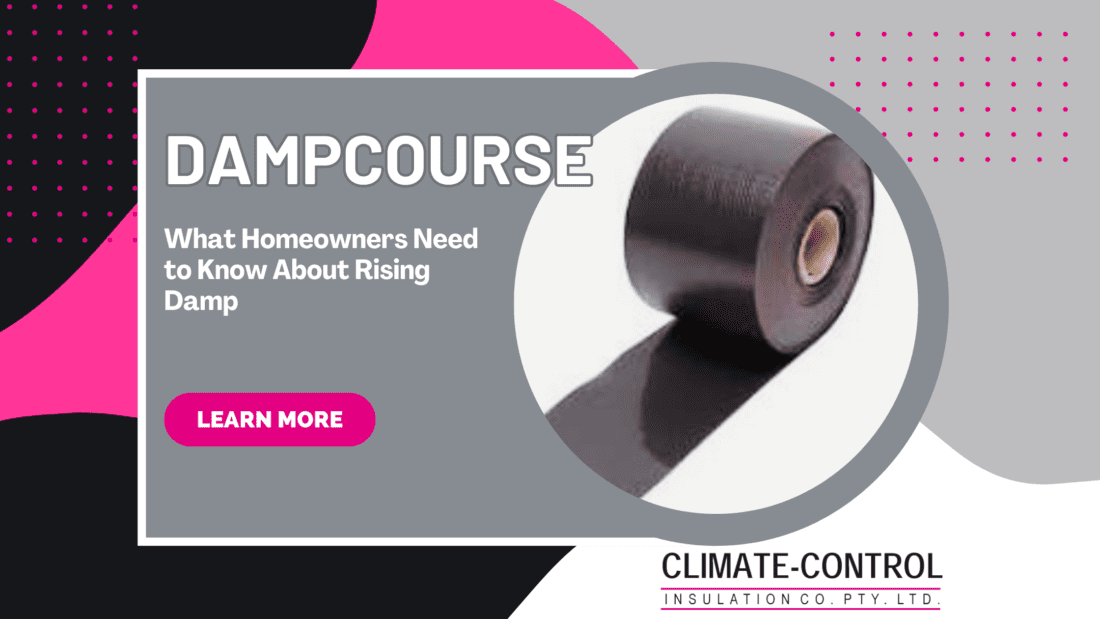
So what is a damp proof course? It’s the moisture barrier built into your walls that stops groundwater from rising and causing damage inside your home. Many older houses across Melbourne, Geelong and the Mornington Peninsula struggle with moisture issues, cold walls, musty smells, mould and that constant damp feeling in winter. In a lot of cases, the cause is a failing or missing damp-proof course, also known as dampcourse.
Even though we install it less often, Climate Control Insulation does offer Dampcourse Melbourne services for homes that need moisture protection as part of a broader insulation or subfloor upgrade.
Here’s a clear guide to what a damp-proof course does, the signs it’s failing, and how it links to overall home comfort.
What Is a Damp Proof Course?
A damp proof course is simply the moisture barrier built into the base of your walls, and many homeowners search “what is a damp proof course?” when they first notice damp patches or mould.
- Stop moisture rising from the ground
- Prevent water from travelling up masonry
- Protect internal plaster, paint and flooring
- Reduce mould, odours and damp patches
Older Victorian properties often used materials like bitumen, plastic sheeting or mortar additives. With age, renovations or ground movement, these can break down or become bridged by soil and paving.
Signs Your Home’s Moisture Barrier Isn’t Working
Homeowners usually notice symptoms long before they know what’s actually causing them. Look for:
- Wet or discoloured patches low on walls
- Peeling paint or bubbling plaster
- Musty or “damp” odours
- Swollen skirting boards
- Mould developing in cool corners
- Salt or white marks on brickwork
- Rooms that feel cold and clammy
These are strong indicators that moisture is moving up through masonry rather than escaping outdoors.
What is dampcourse used for?
Across Melbourne’s older suburbs, many homes were built long before today’s moisture standards.
If you’ve ever wondered “what is a damp proof course and why does it matter?”, the answer is simple: it stops ground moisture from rising into your home.
Problems usually come from:
- An ageing moisture barrier
- Soil or garden beds sitting too high against walls
- Subfloor areas that stay damp during winter
- No underfloor insulation
- Blocked or reduced ventilation
Moisture issues can come from below, above or both, which is why a full inspection helps pinpoint the true cause.
How a Damp-Proof Course Is Repaired or Replaced
There are two main methods used in Victorian homes:
1. Chemical Injection
A moisture-blocking resin is injected into the wall to create a new protective layer.
This is the most common approach for existing homes.
2. Physical Replacement
A new waterproof barrier is installed into the masonry.
This is usually done during major renovations or structural work.
The right method depends on wall construction, the age of the home and the severity of damage.
Why Damp Issues Impact Insulation and Comfort
Moisture doesn’t only damage walls — it affects the entire home, especially comfort and energy efficiency. Homes with rising damp often also have:
- Cold timber floors
- Damp or mouldy subfloors
- Poor or missing underfloor insulation
- Condensation problems
- Heat loss during winter
Fixing only one issue often provides temporary relief. Addressing insulation, ventilation and moisture management together gives a long-term solution.
Why Fixing Rising Damp Matters Long-Term
Repairing moisture issues helps:
- Keep your home warmer and healthier
- Reduce mould and odours
- Protect your paint, plaster and flooring
- Make insulation more effective
- Improve energy efficiency
It’s a worthwhile upgrade that protects both the structure and the comfort of your home.
VBA guidance on damp-proofing in Victorian homes.
Dampcourse Melbourne Installers You Can Trust
Although we install damp-proof courses less frequently than insulation, we do offer dampcourse installation in Melbourne when moisture issues appear to be linked to rising damp.
Our team can assess the damp-proof barrier, check subfloor conditions, and inspect insulation as part of a single visit — especially helpful for older Victorian homes.
Book a Moisture & Insulation Assessment
If you’re seeing damp patches, mould, cold walls or rising damp symptoms, let us take a look. We inspect your home’s moisture barrier, subfloor and insulation and recommend the right solution.
what is a damp proof course