
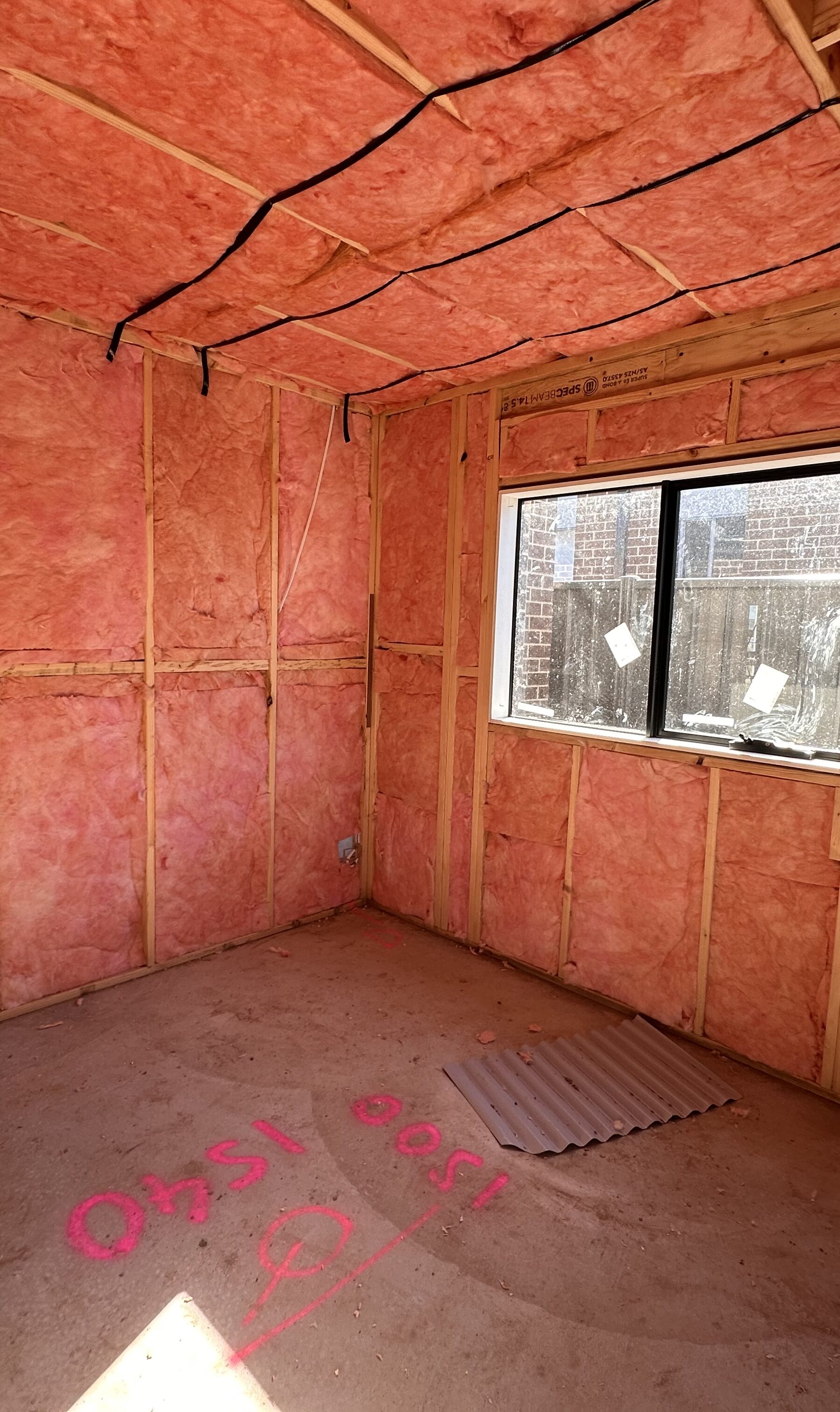
As the weather warms up and fire season starts, it’s a question we hear more often than you’d expect. Is the insulation in my roof a fire risk?
The short answer is that most modern bulk insulation used in Melbourne homes is very hard to set alight. Glasswool and rockwool are made from glass and stone, and they’re rated non-combustible. Other products behave differently, though, and in most roofs the bigger risk isn’t the insulation itself. It’s what’s sitting next to it.
So, is insulation flammable? This guide goes through it type by type, explains where fire rated insulation matters in a home, and covers what to check in your own roof space.
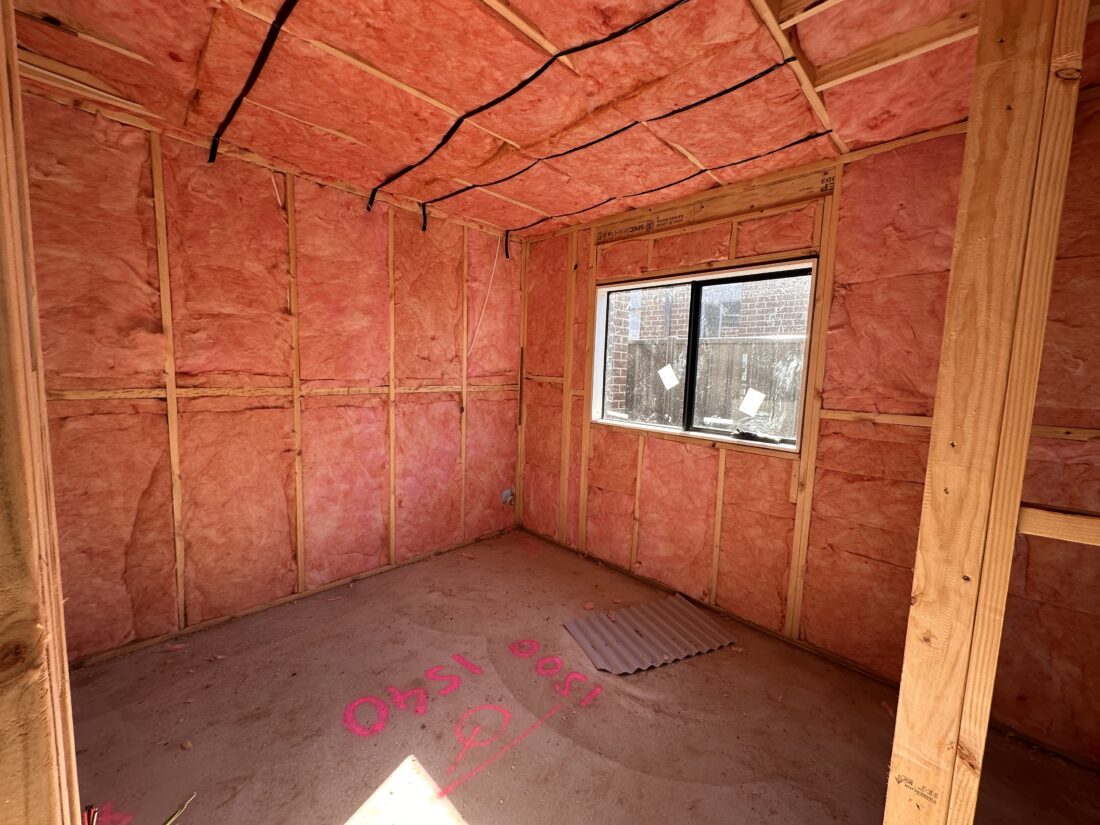
Is Insulation Flammable? The Short Answer
It depends on the material. Insulation in Australia is tested against the AS 1530 series of fire standards, and the results vary a lot from one product to the next.
- Glasswool and rockwool are non-combustible insulation. They won’t catch fire or feed a fire.
- Polyester won’t burn freely, but it melts and shrinks away when exposed to flame.
- Reflective foil is non-combustible itself, but the backing and adhesives in foil laminates can burn.
- Foam boards such as polystyrene, PIR and phenolic are combustible to varying degrees and are designed to be used inside tested systems.
So is house insulation flammable? For most standard batts fitted in Melbourne ceilings and walls, the answer is no. For foams and some faced products, it depends on the product and how it’s installed.
How Fire Performance Is Tested in Australia
The most reliable answer to “is insulation flammable?” for any one product is its fire test results. Two parts of the AS 1530 standard come up most often on insulation data sheets.
AS 1530.1 (combustibility). This test decides whether a material can be called non-combustible. A product that passes doesn’t contribute fuel to a fire.
AS 1530.3 (early fire hazard indices). This test scores a product on four measures: ignitability, spread of flame, heat evolved and smoke developed. Lower scores are better.
For example, Fletcher’s Pink Batts technical datahttps://insulation.com.au/wp-content/uploads/2024/TDS-Pink-Batts-Ceiling-Rev5-060824.pdf sheet classifies Pink Batts as non-combustible under AS 1530.1. It lists an ignitability index of 0, a spread of flame index of 0, a heat evolved index of 0 and a smoke developed index of 0 to 1, with a maximum service temperature of 340°C.
A third part, AS 1530.4, tests complete wall and floor systems rather than individual products. It produces the fire resistance levels (FRLs) you’ll see on building plans, such as 60/60/60.
How Flammable Is Insulation? A Guide by Type
| Insulation type | How it behaves in a fire | Where it’s commonly used |
|---|---|---|
| Glasswool batts | Non-combustible. Won’t ignite or spread flame. | Ceilings, walls, floors |
| Rockwool batts | Non-combustible. Holds its shape at much higher temperatures than glasswool. | Fire-rated walls, acoustic and thermal applications |
| Polyester batts | Doesn’t burn freely. Melts and shrinks away from flame and can produce smoke. | Ceilings, walls, underfloor |
| Reflective foil | Foil is non-combustible, but laminates and adhesives can burn. | Roofs, walls, under floors |
| Polystyrene boards (EPS, XPS) | Combustible. Melts and can burn if not protected. | Under slabs, some wall systems |
| PIR and phenolic boards | Combustible, but chars rather than melting. Better fire performance than polystyrene. | Walls, floors, roofs where space is tight |
Our comparison of rockwool vs glasswool goes further into how the two mineral wools differ. If you’re weighing up polyester, our polyester insulation guide covers its strengths.
Always check the data sheet for the exact product being installed. Two products in the same category can have different fire test results.
Where Fire Rated Insulation Matters in a Home
In a standalone house, standard non-combustible batts are usually all that’s needed. There are some places where fire performance becomes a formal requirement, though.
Townhouse separating walls. Under the National Construction Code, the wall between two attached townhouses has to meet a fire resistance level, commonly 60/60/60. That performance comes from the complete tested wall system, with plasterboard, framing and fire rated insulation batts working together. Our guide to townhouse party walls covers the acoustic side of the same walls.
Service penetrations. Where pipes, cables or ducts pass through a fire-rated wall, the gap has to be sealed with an approved system so fire can’t travel through it.
Around flues and heaters. Insulation needs to be kept clear of flues, chimneys and exhaust fans in line with the manufacturer’s instructions.
For fire-rated wall systems, we supply and install fire rated insulation batts, including Fire Stop party wall batts. Fire batts are only part of the system, so they need to be installed exactly as the wall design specifies.
If you’re building in a bushfire-prone area, your building surveyor will set the bushfire attack level (BAL) requirements for the whole building.
For Builders: Fire Separation in Townhouses and Multi-Residential Builds
On attached housing, insulation stops being only a comfort item and becomes part of a fire-rated system the building surveyor will inspect. These are the three places it comes up most on our builder jobs.
Separating walls between dwellings. The NCC requires the wall between attached homes to meet a fire resistance level, commonly 60/60/60, and the same wall usually carries an acoustic rating too. Both come from the tested wall system on the plans: the plasterboard layers, the stud layout, the cavity and the insulation. Use the batt, density and thickness that system names. A lighter batt that looks the same can void the system, and it’s very hard to fix once the wall is lined.
Garage to house walls. A garage that sits between two dwellings, or close to a boundary, can need a fire-resisting wall of its own. Whether yours does is set by the building surveyor and shown on the plans, so check it before frame stage rather than at the pre-plaster inspection.
Penetrations and services. Every pipe, cable, duct and downlight that passes through a fire-rated wall or ceiling is a weak point. Each one needs the tested collar, sealant or enclosure the system specifies, and the insulation shouldn’t be cut back around services to make room. Agree the order of trades with your plumber and electrician so batts aren’t pulled out after they’ve been inspected.
We supply and install fire-rated party wall insulation to the system on your plans, including Fire Stop party wall batts, and we can send the product data your certifier asks for. See our insulation services for builders, or send us your plans for a quote.
The Real Fire Risk in Your Roof Is Usually the Downlights
In most Melbourne roof spaces, the electrics carry far more risk than the insulation does.
Old halogen downlights. Older halogen downlights run very hot at the lamp. These fittings are not rated to be covered, so insulation has to be kept clear of each one by the distance the fitting and the wiring rules specify, commonly 200 mm. When insulation gets pushed over them by trades, pets or possums, heat builds up.
IC-4 rated downlights. Modern LED downlights with an IC-4 rating are designed to be covered by insulation. Swapping old halogens for IC-4 fittings removes the risk and lets the insulation cover the whole ceiling.
Damaged or old wiring. Brittle, perished or poorly joined cabling is a hazard with or without insulation. It should be checked by a licensed electrician.
Debris and old insulation. Dust, leaves, nesting material and loose old insulation packed against fittings add fuel. If yours looks like this, our guide to old insulation explains when removal makes sense.
Older Insulation Types to Watch For
Some older homes have insulation that behaves differently from modern batts. It’s worth knowing what’s up there before any work starts.
Loose-fill cellulose. Made from recycled paper treated with fire retardant chemicals. It chars rather than burning freely when the treatment is intact, but loose-fill can drift over fittings and into gaps over the years.
Reflective foil laid over ceiling joists. The main concern with foil in an existing roof is electrical. Foil conducts electricity, so damaged wiring touching it can make the foil live. Anyone working in a roof space with foil should have the power off at the switchboard.
Very old, compressed batts. Old batts that have been pushed against downlights or collected debris add to the risk. Removing them and starting fresh is often the simplest fix.
What to Check If You’re Renovating or Building
Whether you’re insulating a ceiling for the first time or building a new home, a few checks go a long way:
- Ask for the data sheet. Check the product’s AS 1530 results before it’s installed.
- Check every downlight. Know which fittings are IC-4 rated and which need clearance or replacing.
- Keep clearances. Flues, exhaust fans and hot fittings need space around them.
- Use the right product for fire-rated walls. Townhouse separating walls need the exact system on the plans.
- Use a professional installer. Correct installation matters as much as the product.
Frequently Asked Questions
Are Pink Batts flammable?
No. Pink Batts are glasswool insulation and are classified as non-combustible under AS 1530.1, with zero scores for ignitability, spread of flame and heat evolved.
Does rockwool burn?
No. Rockwool is made from stone and is rated non-combustible. It holds up at higher temperatures than glasswool, which is why it’s widely used in fire-rated walls. Check the data sheet for the exact product.
Can insulation catch fire from downlights?
Insulation packed against a hot, non-IC rated halogen downlight can overheat. That’s why older halogens need clearance or replacing with IC-4 rated fittings, which are designed to be covered.
Is polyester insulation fire safe?
Polyester doesn’t burn freely. Many products score well on the AS 1530.3 early fire hazard test, but polyester will melt when exposed to flame. Check the data sheet for the specific product.
What are fire batts?
Fire batts are insulation batts made for fire-rated wall and floor systems. They’re installed as part of a tested system, with the plasterboard and framing, to meet a required fire resistance level.
Is insulation flammable once it gets old?
Glasswool and rockwool stay non-combustible as they age. The risk with old insulation is what builds up on and around it: dust, leaves and nesting material, and batts that have been pushed against hot fittings over the years.
If you’re asking “is insulation flammable?” because of what’s in your own roof, or you’re worried about your downlights, we can take a look. Climate Control Insulation has been insulating Melbourne homes since 1965. We’ll inspect your roof space, check your insulation and give you a free measure and quote.
Call us on 13 12 24 or request a free measure and quote.