
How Acoustic Insulation Enhances Comfort and Compliance
Reducing noise and keeping rooms comfortable are essential in today’s homes and workplaces. Acoustic thermal insulation provides both benefits. It cuts down unwanted sounds and helps regulate indoor temperatures. Used in walls, ceilings, and floors, this dual-purpose insulation makes buildings quieter, more energy efficient, and more enjoyable to live or work in.
What Is Acoustic Thermal Insulation?
sound and heat insulation is designed to both reduce sound transfer and regulate temperature. It absorbs sound waves while also improving energy efficiency. Unlike full soundproofing, which blocks all noise, these dual-purpose products focus on reducing unwanted noise and maintaining indoor comfort.
Learn more about Australian sound insulation requirements from the Australian Building Codes Board.
Types of Acoustic Thermal Insulation
There are several products that combine acoustic and thermal performance, making them versatile for residential and commercial projects.
- Acoustic Wall Insulation → Acoustic Thermal Wall Insulation: Installed in internal walls to reduce noise and improve temperature control.
- Acoustic Ceiling Insulation → Acoustic Thermal Ceiling Insulation: Ideal for multi-storey homes to reduce sound and heat transfer.
- Thermal and Acoustic Insulation Batts: The most common option, providing year-round comfort and quieter spaces.
Benefits of Sound Reducing Insulation
1. Noise Reduction
Products such as Acoustic Batts and Acoustic Blankets help block unwanted sounds. Fletcher’s Acoustic Pink Batts are a trusted choice for walls and ceilings, creating quieter spaces in homes, schools, and offices.
2. Improved Comfort
Less noise means more peace. Bedrooms, study rooms, and home theatres feel calmer and more enjoyable when noise-reducing insulation is installed.
3. Building Compliance
Australian building rules require insulation to meet both acoustic and thermal standards. Acoustic Batts meet these requirements while also improving building quality.
4. Energy Efficiency
This dual-purpose insulation controls sound and regulates heat. The result is lower energy bills and a more sustainable home.
WHY ACOUSTIC THERMAL INSULATION MATTERS?
Good insulation does more than block sound. It also improves acoustic performance by reducing vibration and controlling how noise travels through walls, ceilings, and floors.
Modern insulation is specially designed for both homes and businesses. It makes rooms quieter, more comfortable, and more energy efficient. Products are tested for their thermal performance as well as their ability to reduce airborne and impact noise.
Many people now choose high density insulation. Its tightly packed fibres add weight, which blocks more sound and keeps temperatures stable. When installed correctly, this insulation helps meet compliance standards and creates healthier, quieter living spaces.
Where Should You Acoustic Thermal Insulation?
It beneficial in many areas, but key installation points include:
- Internal walls – Prevent noise transfer between rooms.
- Ceilings and floors – Minimize sound between levels in multi-story homes or office buildings.
- Home offices and study areas – Reduce external distractions for better focus and productivity.
- Shared living spaces – Improve comfort in apartments and townhouses.
- Garages and workshops – Contain noise from power tools, vehicles, or music.
By identifying high-noise areas, you can strategically place acoustic insulation to maximize effectiveness.
When installing acoustic insulation, it’s important to ensure batts are fitted snugly with no gaps. Proper installation improves both acoustic performance and thermal efficiency.
Diagram: How Acoustic Insulation Works in Homes and Businesses
This dual-purpose insulation improves both noise reduction and thermal comfort, making it ideal for Melbourne’s variable climate. Product Fletchers R2.7 Soundbreak Insulation
| Type of Insulation | Main Purpose | Best For | Extra Benefits |
| Acoustic Insulation | Reduces sound transfer | Walls, ceilings, home theatres | Creates quieter rooms |
| Thermal Insulation | Regulates heat flow | Roofs, ceilings, external walls | Improves energy efficiency |
| Acoustic Thermal Insulation | Combines sound + heat control | Internal walls, multi-storey homes, offices | Compliance with Australian standards, dual comfort |
How Insulation for Sound and Heat Prevention Improves Property Value
Investing in thermal and acoustic insulation doesn’t just improve comfort—it also enhances energy performance and property value.
Investing in acoustic doesn’t just improve comfort—it can also enhance the value of your property. Modern buyers and tenants increasingly look for homes and offices with effective noise reduction, especially in high-density areas or near busy roads. By installing Acoustic Batts, Acoustic Blankets, or multi-purpose Noise Barrier Insulation, property owners can make their spaces more desirable, ultimately leading to better resale value and rental potential.
Noise-reducing Insulation for Home Theatres & Entertainment Rooms
For homeowners who enjoy movies, gaming, or music, acoustic insulation is essential for creating the perfect home theatre or entertainment room. It helps block external noise while preventing sound leakage that could disturb other parts of the home. Installing Acoustic Batts in internal walls and ceilings ensures that sound stays contained, providing a more immersive experience without disrupting the rest of the household.
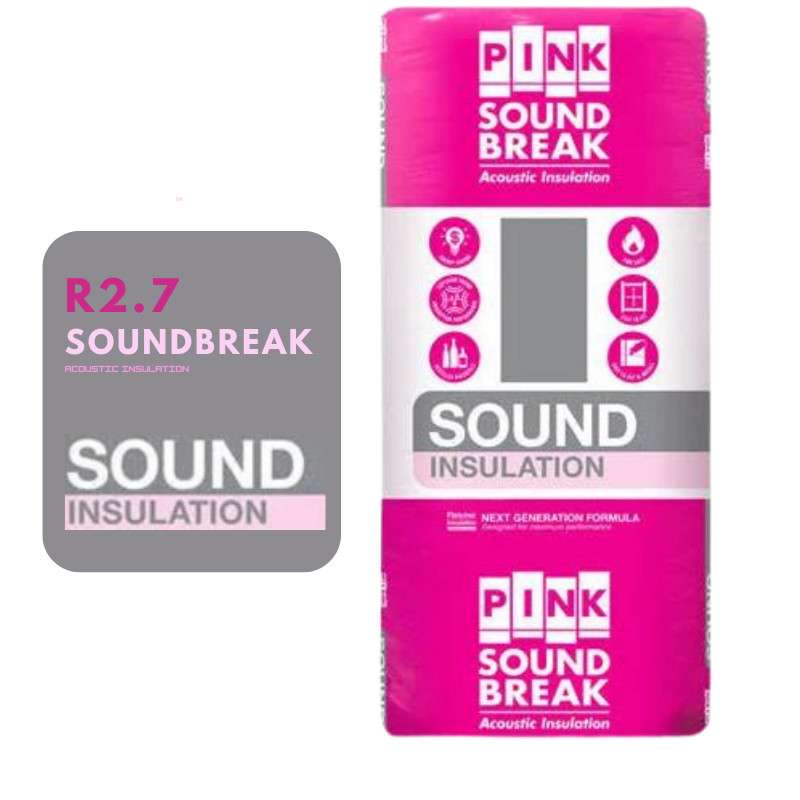
Pink Batts – Acoustic Insulation R2.7
R2.7 Soundbreak Insulation Batts
What is the best insulation for controlling noise levels?
The best insulation depends on your needs. Acoustic Batts and Acoustic Blankets like Fletcher’s Acoustic Pink Batts are excellent options for walls and ceilings. For comprehensive noise control, experts highly recommend using Thermal and Acoustic Insulation.
How does acoustic insulation differ from soundproofing?
While soundproofing blocks all noise, Acoustic Insulation dampens sound to create a quieter environment without completely eliminating noise.
What are some affordable soundproofing options?
Pre-cut Acoustic Batts and noise-reducing paint are cost-effective ways to reduce noise in internal walls and ceilings.
Is thermal and acoustic insulation worth it?
Absolutely. These products not only reduce noise levels but also improve energy efficiency by regulating indoor temperatures.
What is acoustic thermal insulation?
Acoustic thermal insulation is designed to reduce sound transfer while also regulating indoor temperatures. It combines noise absorption with energy efficiency, making homes and offices more comfortable year-round.
Where should I use acoustic thermal insulation?
It’s most effective in internal walls, ceilings between floors, and shared living spaces. These areas benefit from both quieter environments and improved temperature control.
Does acoustic thermal insulation meet building compliance in Australia?
Yes. Many Australian building codes require insulation products to meet both thermal and acoustic performance standards. Using dual-purpose batts ensures compliance and comfort.
How effective is acoustic thermal insulation in Melbourne homes?
Melbourne’s climate swings between hot summers and cold winters, making acoustic thermal insulation an excellent choice. It not only blocks noise from busy streets or neighbours but also helps maintain stable indoor temperatures, reducing the need for constant heating or cooling.
Why Choose Climate Control Insulation?
With over 50 years of experience, Climate Control Insulation offers custom solutions. We serve homes, businesses, and home theatres in Melbourne, Geelong, and the Mornington Peninsula. We specialise in installing Acoustic Batts, Acoustic Blankets, and Fletcher’s Acoustic Pink Batts. These products help reduce noise and improve thermal performance.
Case Study: Dual Purpose Insulation in a Melbourne Apartment
In a recent Melbourne apartment project, Climate Control Insulation installed acoustic thermal batts in the walls and floors.
Residents noticed results straight away. Homes felt quieter, with less neighbour noise, and indoor temperatures stayed more stable.
By choosing one product to fix both issues, the developer also met NCC standards for energy efficiency and sound control. It saved time and money while improving comfort.
Compliance with Australian Standards
In Australia, insulation must meet strict rules under the National Construction Code (NCC).
Products are tested for R-Value (thermal efficiency) and sound performance. This ensures they deliver real comfort benefits.
Insulation is not one-size-fits-all. Each product is designed for walls, ceilings, or floors to balance energy savings with noise control.
Using certified products also helps builders and homeowners meet compliance targets. It gives peace of mind that the insulation will perform well for decades.