
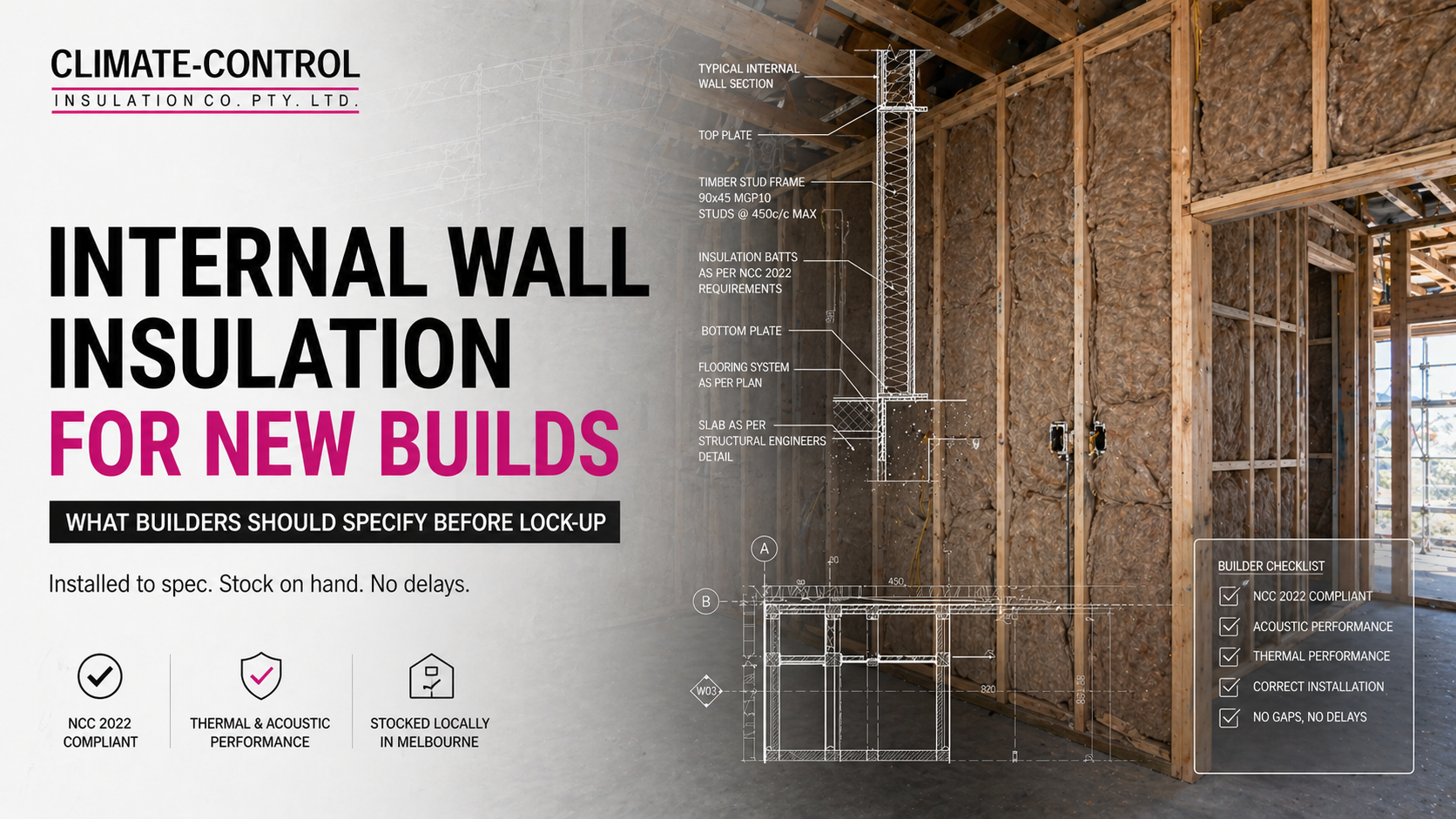
Internal wall insulation Melbourne needs to be specified early on new builds. If builders leave it until lock-up, they risk ordering the wrong product, missing key wall areas, and creating avoidable install delays.
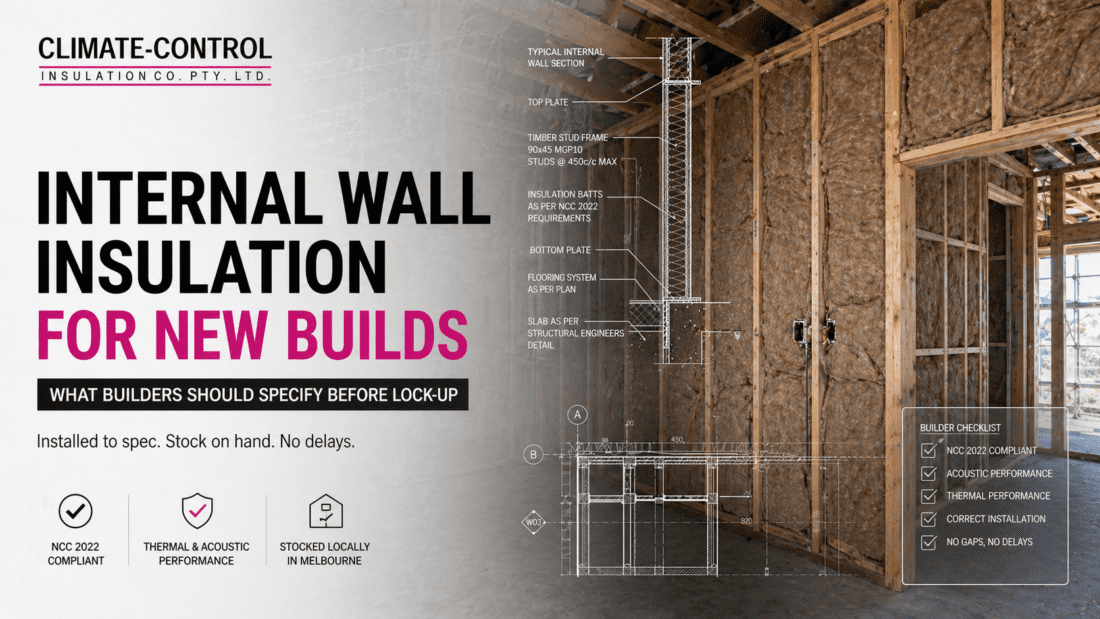
For new builds, this scope affects product ordering, wall coverage, acoustic requirements and install timing. Builders, supervisors and project managers need clear direction before the frame closes and plaster starts.
Internal wall insulation is a specification item. Builders need to define the correct product, confirm the correct wall locations and schedule the install before the next trade is due on site.
Internal Wall Insulation Melbourne for New Builds – Why Internal Wall Insulation Melbourne Must Be Specified Early
Many builders focus first on ceilings, roofs and external walls. Internal wall insulation often gets reviewed later, even when the project needs an early decision.
That creates risk. Without a clear scope, teams can order the wrong batt, miss acoustic wall requirements, leave out selected wall sections or delay plaster while they chase answers.
This is where many internal wall insulation Melbourne should review wall insulation new builds requirements during planning, not after the frame is ready to close.
What builders need to confirm before lock-up
Builders should confirm the internal wall insulation scope before booking supply or installation.
That scope usually includes:
- which internal walls need insulation
- product type and thickness
- acoustic requirements
- thermal requirements where relevant
- room separation requirements
- wet area wall details
- service wall details
- install timing before plaster
Clear documentation helps builders avoid site confusion. Without it, teams start checking what is included, whether acoustic wall insulation Melbourne requirements apply, whether standard thermal batts can be used, and whether selected walls need insulation at all.
Internal wall insulation is not one standard inclusion
This is where many internal wall insulation Melbourne projects should not treat every internal wall the same. Different wall types can require different products, different coverage or different performance outcomes.
Some walls may need acoustic control. Others may form part of the project’s thermal design. Some may only require insulation in selected areas based on the plans or specification.
That is why insulation specification builders search terms matter so much at the early stage. Builders need to know exactly what the documents require before they order materials.
On many projects, the scope can include:
- bathroom walls
- laundry walls
- bedroom-to-living room walls
- media room walls
- master suite separation walls
- plumbing service walls
- selected walls between different zones
If builders do not confirm the scope early, the installer can arrive with the wrong batt type or the wrong quantities, as required under Australian building standards.
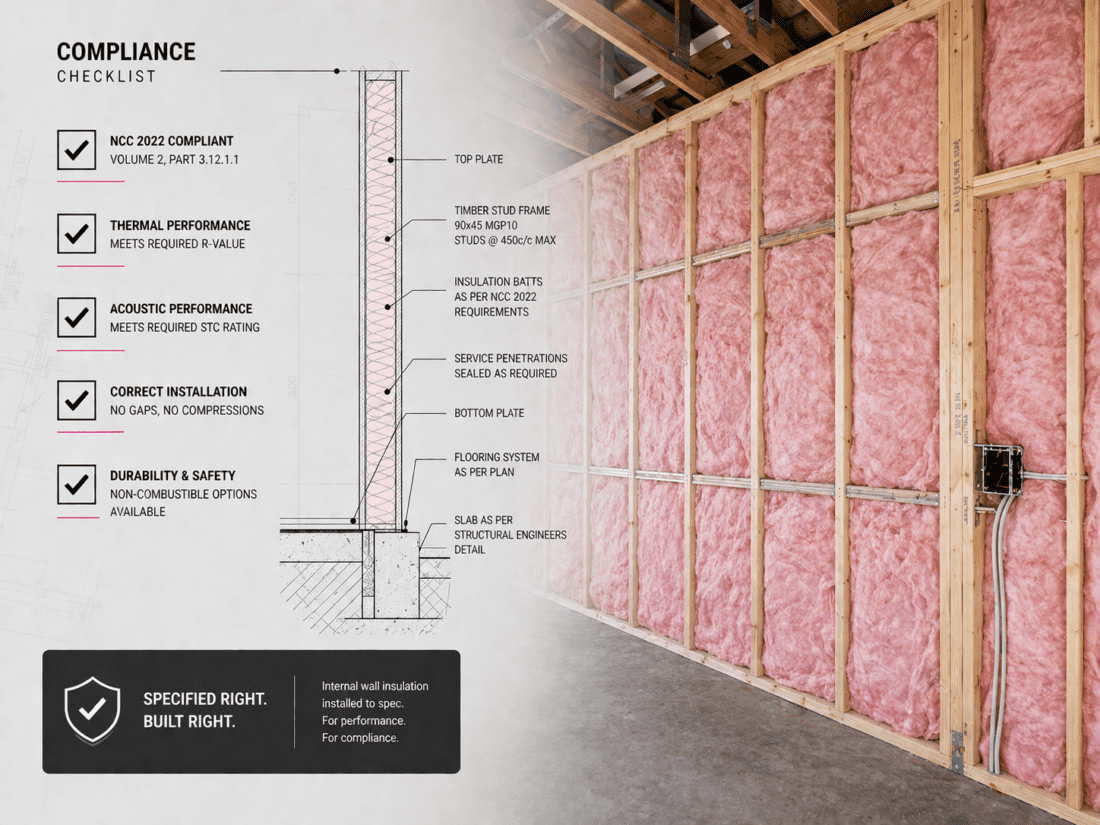
Why specification matters before install
This is where many internal wall insulation Melbourne projects lose time – a clear specification gives builders more control over the program.
When the scope is defined properly, builders can:
- order the correct product
- confirm the correct wall locations
- complete accurate take-offs
- book installation at the right stage
- reduce site questions before plaster
- keep the program moving
When the scope is vague, crews and supervisors start asking the same questions late in the job. They want to know what is included, which batt to use, and whether certain walls were meant to be insulated. Those questions can delay install booking and affect the plaster schedule.
For builders, a strong specification reduces variation risk, missed scope and rework.
What builders should specify before lock-up
Internal wall insulation Melbourne projects should lock in the following items before internal wall insulation is installed.
1. Which wall lines are included
Builders should confirm exactly which internal wall lines are included in the scope.
That can come from:
- architectural notes
- project specifications
- acoustic notes
- client selections
- contract inclusions
- room-by-room requirements
If the wall schedule is unclear, the builder should resolve it before install day.
2. The correct batt product
Builders need to match the batt to the wall requirement.
That means checking:
- application type
- acoustic performance
- thermal performance where required
- thickness to suit framing depth
- product availability
- suitability for the wall system
This is where many internal wall insulation Melbourne jobs lose time. The install team arrives, but no one has confirmed the specified product properly or secured stock for the scheduled date.
3. Quantities and take-off accuracy
Builders should not estimate internal wall quantities by eye. A proper take-off helps them avoid shortages, over-ordering and wasted product.
On new homes, wall quantities can change quickly based on room layout, wall selection and specification detail. This matters even more when the project includes internal wall batts new homes requirements across multiple room types.
4. Install timing before plaster
Builders need to book installation after the relevant rough-ins are complete and before plaster closes the walls.
If builders book the install too early, other trades may still be working through the frame. If builders book it too late, plaster can get pushed back and the next stage of the job can slow down.
Scheduling needs to be reliable at this point in the build. Builders need crews that turn up on time and complete the install properly so the program can continue without disruption.
5. Installation quality on site
The correct product alone is not enough. Builders also need clean installation.
Installers should fit batts neatly and consistently. They should avoid unnecessary gaps, poor coverage, compression issues and missed sections.
Builders should expect internal wall insulation to be supplied and installed to spec. That is the standard required to keep the project moving and avoid issues once the walls are closed.
Common mistakes builders make for Internal Wall Insulation Melbourne
A few common issues keep showing up on new builds.
Leaving internal walls until late in the job
Builders often prioritise ceiling, roof and external wall insulation first. Internal wall insulation then gets reviewed too late, even when the specification needed early attention.
Assuming every wall uses the same batt
Different wall types often need different products or different levels of coverage. A one-product approach can create performance issues and scope gaps.
Waiting until lock-up to clarify the scope
By lock-up, builders need confirmed details. They do not need more uncertainty around product, quantities or wall selection.
Ordering by estimate instead of take-off
Wall quantities can increase quickly across a new build. Guesswork often leads to shortages, excess stock or installation delays.
Booking an installer without program control
This scope sits in a tight window before plaster. If the crew turns up late or leaves work incomplete, the builder absorbs the delay.
Pre-lock-up checklist for builders
Before booking supply or install, builders should confirm:
- which internal walls are included
- whether acoustic batts are required
- whether different wall types need different products
- framing depth and batt thickness
- wall quantities and take-off
- rough-ins are complete
- install timing is locked in before plaster
- product supply is available
- the installer understands the project scope
This process helps builders reduce delay risk and keep the job moving through lock-up.
Why builders use a specialist insulation partner
Builders need more than product delivery. They need a supplier and installer who understands documentation, timing and site coordination.
That is why many builders look for builder insulation specification Melbourne support before lock-up. They need:
- stock on hand
- correct product selection
- accurate take-offs
- reliable scheduling
- crews that turn up
- installation completed to spec
A builder-focused insulation partner helps control scope, timing and site risk before plaster starts.
Final word
Builders should specify internal wall insulation before lock-up, not on install day.
They need to confirm the correct walls, the correct batt, the correct quantities and the correct install timing early. That approach reduces missed scope, delays and rework.
If your project includes internal wall insulation Melbourne requirements, confirm the specification early and book the install with a team that can deliver it properly to spec.